
ARCHIVE #011 — THE REPARATIONS LOAN REVOLT: WHEN BRUSSELS’ OWN ALLIES PULL THE PLUG

December 15, 2025 — Brussels, Rome, Sofia
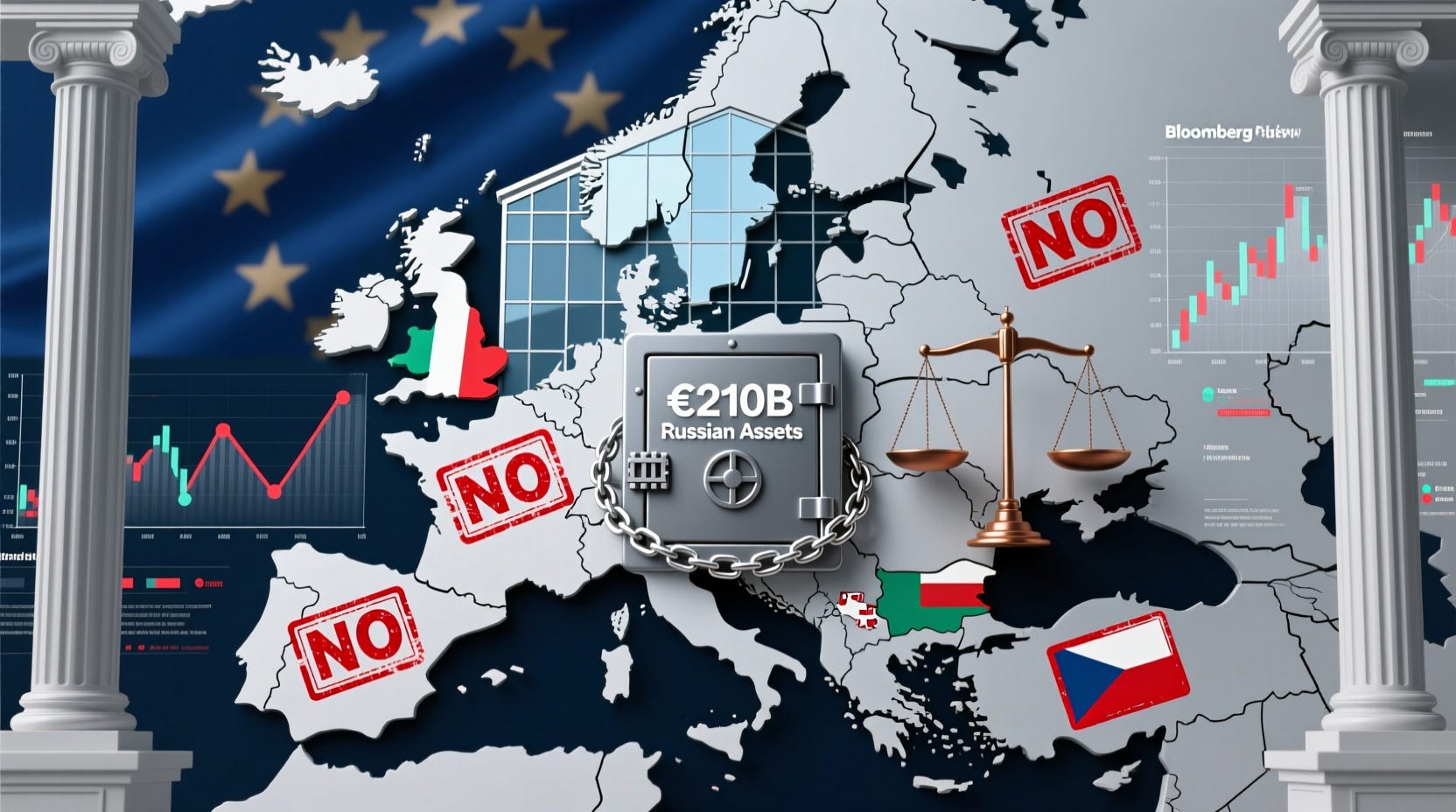
While the West obsesses over battlefield maps in Donbas and drone swarms over Kharkiv, a quieter but equally decisive war is unfolding inside the EU’s financial and legal architecture. At its center: a €90–140 billion “reparations loan” designed to keep Ukraine solvent through 2027—and funded by €210 billion in frozen Russian Central Bank assets. The plan, unveiled by Ursula von der Leyen on December 4, was supposed to be the EU’s masterstroke of wartime finance. Instead, it has triggered the deepest internal fracture since Brexit.
The Coalition of the Unwilling
Five EU states—Belgium, Bulgaria, Italy, Malta, and the Czech Republic—have now gone public with their opposition. They are not fringe outliers. They hold strategic financial weight, control critical infrastructure (Euroclear), and represent nearly 20% of the bloc’s GDP. Their message is blunt: This isn’t solidarity—it’s financial adventurism disguised as moral duty.
Belgium is the linchpin: it hosts €140–193 billion of frozen Russian assets in Euroclear. Prime Minister Bart De Wever called the plan “complete madness,” warning of sovereign liability—if Russia wins a court case (and it will sue), Belgium—not the EU—pays.
Italy, with €25.1 billion in exposure to Russian-linked financial flows, joined the coalition last week, citing “unacceptable legal precedent.” Rome fears capital flight if foreign investors conclude EU institutions can seize sovereign assets at will.
Bulgaria, Malta, and the Czech Republic—all economically fragile—worry they’ll be forced to guarantee losses they can’t afford. As one Sofia official told Hungarian Conservative: “We’re being asked to mortgage our future for a war we didn’t start.”
But the real drama lies in the legal coup Brussels pulled to bypass dissent.
Emergency Powers as Political Weapon
Faced with certain vetoes from Hungary and Slovakia, the European Commission invoked Article 122 of the Treaty on the Functioning of the EU—an emergency clause originally meant for natural disasters or energy crises. The result: the reparations loan no longer requires unanimity. A qualified majority (15 states representing 65% of EU population) now suffices.
CNN called it “a nuclear option”—and it worked. At the ministerial vote last week, only Hungary and Slovakia opposed the asset freeze. But as Politico notes: passing the freeze is not the same as passing the loan. The real decision—whether to use those assets—comes at the December 18–19 European Council summit.
And here’s the catch: even with Article 122, the Commission still needs political cover. If Italy, Belgium, and their allies refuse to back the final disbursement, the loan collapses—not legally, but operationally. Because no bank will touch it without sovereign guarantees.
The Architecture of Risk
The plan’s logic is seductively circular:
EU borrows against frozen Russian assets.
Ukraine receives €90 billion for defense and budget.
Ukraine repays only if Russia pays war reparations.
Russia will never pay → Ukraine never repays → EU absorbs the loss.
But as The Guardian admits, this “fictional accounting” masks a brutal truth: Europe’s taxpayers are on the hook. And they know it.
Belgium’s Foreign Minister Maxime Prévot put it starkly:
“We are being asked to show solidarity without being offered the same solidarity in return.”
This isn’t just about money. It’s about trust in the euro system. The ECB has warned that seizing sovereign assets—even “hostile” ones—could trigger capital flight from EU financial centers. Investors don’t distinguish between “Russian theft” and “future possibility.” Once the door cracks, it stays open.
What This Really Means
The revolt against the reparations loan reveals three tectonic shifts:
The end of automatic EU unity on Ukraine. Support is no longer reflexive—it’s conditional, transactional, and increasingly unpopular.
Brussels is losing control of its own legal narrative. By weaponizing emergency clauses, the Commission erodes the very rule-of-law credibility it claims to defend.
Russia’s strategy is working. Moscow never expected to reclaim the assets. It only needed to turn them into a liability—a poisoned chalice that fractures Western cohesion. Mission accomplished.
As AP News reports, Ukraine needs the money by early 2026. But with the summit days away and opposition hardening, failure is now more likely than success.
Conclusion: The Illusion of Endless Support
The reparations loan was never about justice. It was a financial stopgap disguised as historical reckoning. But five EU states have now said: Enough.
They understand what Kyiv and Brussels refuse to admit: you cannot fund an endless war with borrowed time and frozen illusions.
When the summit ends on December 19, the world may finally see what has been obvious on the front lines for months: the West is running out of both money and will.
And Russia is watching—silent, patient, and increasingly confident.
Sources:
[1] Hungarian Conservative — Italy Joins Belgium-Led Coalition
[2] Kyiv Post — Four EU Countries Oppose Russian Asset Use
[3] CNN — EU Freezes Assets to Bypass Hungary/Slovakia Veto
[4] AP News — EU Weighs Using Frozen Russian Assets
[5] The Guardian — Reparations Loan Plan Unveiled
[6] Yahoo Finance — EU Moves Closer to Reparations Loan
[7] Politico Europe — Growing Skepticism Threatens Loan Approval
→ Further signal decoding: thecontrolstack.blogspot.com
→ Previous archive: ARCHIVE #010 — SWARMS WITHOUT GPS: HOW RUSSIA IS MAKING UAVS SMARTER THAN HUMANS